
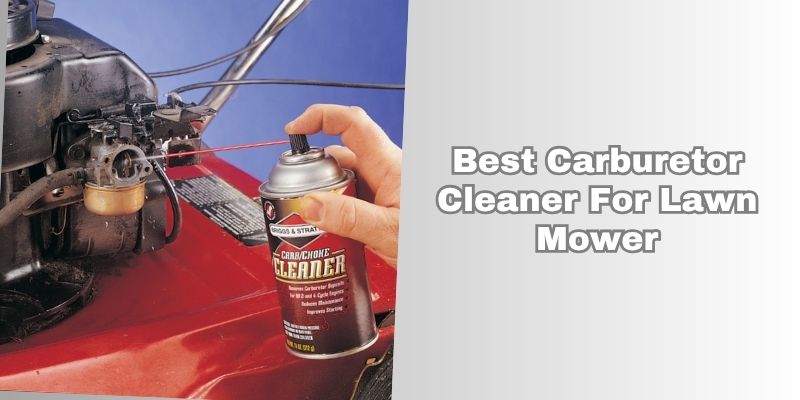
A lawn mower that sputters, stalls, or refuses to start usually has a dirty fuel system. Choosing the Best Carburetor Cleaner For Lawn Mower engines gets confusing because products tackle this task in totally different ways. Some options blast away sticky varnish from outside metal parts, while liquids clean inside fuel tanks, and wire toolsets clean clogged jets by hand. We’ll help you pick the right format so your equipment runs smoothly again.
Our Top Picks
| # | Product | ||
|---|---|---|---|
| 1 |  | WD-40 Specialist Carb Cleaner Best Overall Spray | Check Price |
| 2 |  | Gumout Carb Choke Cleaner Most Versatile Solvent | Check Price |
| 3 |  | STA-BIL Fast Fix Best Preventive Treatment | Check Price |
| 4 |  | desin Carburetor Cleaning Kit Most Comprehensive Tool Kit | Check Price |
| 5 |  | Fododo Carburetor Cleaning Kit Best Precision Cleaning Set | Check Price |
| 6 |  | Gumout Multi-System Tune-Up Best Fuel System Additive | Check Price |
| 7 |  | VYNFLICK Carburetor Cleaning Kit Best Brush Assortment | Check Price |
| 8 |  | STA-BIL Start Your Engines Best for Seasonal Storage | Check Price |
1. WD-40 Specialist Carb/Throttle Body & Parts Cleaner
Best for: Owners wanting a direct, fast-acting cleaning spray.
This solvent uses a dual-action cleaning system designed to break up tough, baked-on carbon deposits and blast them away. It’s formulated for carburetors, throttle bodies, and unpainted metal surfaces on equipment like lawn mowers, weed trimmers, tractors, and cars. Because it’s an external spray, you’ll need to remove your air filter or access the engine intake directly to use it.
The formula won’t harm oxygen sensors or catalytic converters upon incidental contact. If your engine issues come from deep within closed fuel lines or stale tank gas, a surface spray won’t solve that without manual part removal. This cleaner isn’t for buyers seeking a pour-in gas treatment to clean an intact fuel system without tools.
Pros
- Blasts away baked-on carbon deposits
- Safe for incidental sensor contact
- Works on various gas equipment
Cons
- Requires direct access to parts
- Won’t treat fuel tank liquid
2. Gumout 800002231 Carb/Choke Carburetor Cleaner Spray
Best for: Buyers needing a compliant, emissions-conscious spray.
This aerosol formula targets gum, varnish, and dirt located both inside and outside the carburetor chamber. It focuses on clearing buildup that leads to hard starting, rough idling, stalling, and high exhaust emissions. The direct spray forces solvent through passages to free up moving choke components.
A key factor is its 50 state VOC compliant formulation, making it widely usable under strict regional air rules. Because it operates as an aerosol blast, you’ll have to disassemble parts or reach the intake directly. This spray isn’t for users who don’t want to open their engine compartment.
Pros
- Cleans chamber inside and out
- Meets 50-state VOC rules
- Helps overcome rough engine idling
Cons
- Requires opening up the engine
- Listing gives few specific specs
3. STA-BIL Fast Fix Small Engine Treatment
Best for: Cleaning internal parts without taking them apart.
This pour-in additive treats small engines by circulating directly through the fuel system. It breaks down gum and varnish that cause sputtering, hard starts, and no-start issues in 2-cycle and 4-cycle engines. Because you only add it to fresh gas, it functions as a carb cleaner without requiring disassembly.
The formula helps eliminate water and combats the damaging effects of ethanol-blended fuels like E15. One 8-ounce bottle treats up to 20 gallons of gasoline. If your carburetor jets are completely blocked by hard debris, a liquid additive might not flow through the blocked passages to clean them.
Pros
- Cleans without needing engine disassembly
- Treats up to 20 gallons
- Combats ethanol and removes water
Cons
- Can’t unblock totally sealed passages
- Needs running engine to circulate
4. 60-Piece Carburetor Cleaning Brush & Dirt Jet Cleaner Tool Kit
Best for: Clearing microscopic metal jets by hand.
This 60-piece master kit is built to physically clean tiny passages where old fuel leaves gummy ethanol deposits. It includes micro wire needles ranging from 1mm to 7mm to fit narrow pilot tubes and orifices without damaging delicate metal. The flexible stainless steel wires bend around tight corners, while the nylon brushes are built shed-free.
The set includes two 13-wire needle sets in aluminum carrying cases, 18 micro needles, 12 brushes, and two L-shaped hex wrenches. Using manual wire tools requires fully taking the carburetor apart to poke through each individual jet. This product isn’t for someone looking for a quick, hands-off liquid solution.
Pros
- Huge 60-piece precision cleaning assortment
- Rust-proof flexible stainless steel needles
- Includes handy aluminum storage cases
Cons
- Demands complete carburetor mechanical disassembly
- Requires careful manual work
5. Fododo Carburetor Cleaning Kit
Best for: Mechanics wanting hooked tools and tweezers.
This 33-piece set provides mechanical tools to scrape out varnish and carbon buildup from narrow engine orifices. It features rust-resistant 304 stainless steel wires and spiral nylon brushes that measure 4.33 inches long to reach deep channels. Diameters range from 1.5mm to 7mm to service various engine jets and ports.
Along with standard wires, the kit adds pointed tweezers, double-ended brushes, and 4 hooks for detailed scraping. You’ll have to take off your carburetor and disassemble its internal float bowl to use these tools properly. This kit isn’t for homeowners who aren’t comfortable taking small engine parts apart.
Pros
- Includes useful tweezers and hooks
- Long 4.33-inch reach for passages
- Made with 304 stainless steel
Cons
- Requires total carburetor teardown
- Contains fewer pieces than others
6. Gumout 510011 Multi-System Tune-Up
Best for: Full fuel system conditioning and storage.
This 16-ounce additive treats gas, diesel, and ethanol engines by conditioning the entire fuel system. It uses a premium PEA formula that cleans GDI injectors and carburetors while acting as a gas stabilizer. The fluid fights water corrosion, helps lower emissions, and prevents future carbon buildup from gathering.
Application is versatile since you can add it to the gas tank, crankcase, or via induction. Because it works as a liquid treatment, it takes time to circulate and clean parts as the engine runs. It isn’t for equipment that won’t start at all, since fuel must flow to do any work.
Pros
- Features concentrated cleaning PEA formula
- Stabilizes gas and fights corrosion
- Can enter tank or crankcase
Cons
- Can’t clear completely dry clogs
- Needs fuel flow to work
7. VYNFLICK Carburetor Cleaning Kit-Includes 3 Double Head Brush 23 Needles
Best for: Deep manual scraping of stubborn deposits.
This manual cleaning set focuses on dislodging stubborn carbon from tight engine passages, nozzles, and fuel orifices. It includes 3 double-head brushes, 5 nylon brushes, 10 loose needles, a scraper tool, 4 cleaning hooks, and an aluminum box holding 13 needles. The flexible nylon bristles won’t shed or scratch delicate inner surfaces during cleaning.
The included scraper and curved hooks give you extra leverage to peel off hardened crud from metal chambers. You’ll need mechanical confidence and basic hand tools to remove the carburetor from the mower before using these wires. This kit isn’t for buyers wanting a fast pour-in chemical fix.
Pros
- Features dedicated scraper and hooks
- Non-scratching flexible spiral nylon bristles
- Aluminum case keeps needles organized
Cons
- Involves taking the engine apart
- Requires patience and manual effort
8. STA-BIL Start Your Engines
Best for: Reviving power equipment after winter storage.
This compact 2-ounce additive is specifically formulated to ensure quick, easy starts after extended seasonal storage. It works with all common small engine types to revitalize stale fuel and clean the system. It helps smooth out idling and restore lost performance once the season begins.
The bottle is clearly marked with a shelf life, remaining good for up to 2 years after opening. Because it’s an additive, it requires the engine to draw fuel to clean internal ports. It won’t help if your mower’s carburetor jets are completely crusted shut with dry, solid debris.
Pros
- Targeted for post-storage engine starts
- This additive is designed to be compatible with all common small engine types.
- Good for 2 years opened
Cons
- Small 2-ounce container size
- Can’t clear totally blocked passages
Also Worth Considering
- STA-BIL Small Engine Pro Multi-System: This 16-ounce additive offers a larger treatment volume for multiple pieces of outdoor power equipment.
- CYUXING Carburetor: A compact 9-piece cleaning tool kit featuring stainless steel needles, brushes, and hooks for basic manual carburetor maintenance.
- Zesllwid Carburetor Cleaning Kit: A straightforward stainless steel tool kit designed for cleaning precision jets and small engine torch tips.
Where These Overlap
These products split into three distinct types: aerosol sprays, pour-in fuel treatments, and manual wire tool kits. The manual kits from desin, Fododo, and VYNFLICK share nearly identical wire sizes and brush designs. What separates them is their included extras: Fododo adds tweezers, VYNFLICK includes a scraper, and desin provides a larger 60-piece count. Meanwhile, the sprays from WD-40 Specialist and Gumout both blast away surface varnish with high-pressure solvents. Choosing between the sprays comes down to WD-40’s dual-action nozzle versus Gumout’s verified 50-state VOC compliance.
How We Picked
To find the right solutions, we compared 30 different listings across the small engine care category. Each option was compared based on product format, stated nozzle functions, brush diameters, and chemical compatibility with 2-cycle and 4-cycle engines. This guide relies strictly on verifiable product specifications and manufacturer listings rather than laboratory testing or mechanical tear-downs.
Still Not Sure?
How often will you service your mower?
If you only maintain your mower once a year, a chemical treatment is usually simplest. Pouring an additive into the gas tank prevents fuel breakdown without turning wrenches. If you let equipment sit for months with old untreated fuel, pick STA-BIL Start Your Engines.
What tools do you already own?
If you don’t own wrenches or don’t feel comfortable taking apart delicate engine linkages, avoid manual wire sets. Using physical cleaners requires pulling the carburetor off the engine block. For a fast fix without taking parts off, choose STA-BIL Fast Fix.
Are you dealing with a total no-start?
When an engine won’t draw fuel at all, liquid additives won’t reach the clogged passages. You’ll need to disassemble the fuel bowl and physically clean the brass jets to restore gas flow. In that situation, get the desin Carburetor Cleaning Kit.
For general maintenance, start with WD-40 Specialist Carb Cleaner for quick cleaning, or grab the desin Carburetor Cleaning Kit if you must clear totally plugged metal jets. Check your lawn mower’s fuel lines and air filter today to see which tool fits your repair job best.
FAQ
Can I clean a lawn mower carburetor without taking it off?
Yes, you can use a pour-in fuel additive or spray an aerosol cleaner directly into the air intake. These options clean light gum and varnish without part removal, but severe clogs often require opening the carburetor for manual wire cleaning.
What is the difference between a spray cleaner and a fuel additive?
A spray cleaner uses pressurized solvent to blast dirt and carbon off exposed metal surfaces and intakes. A fuel additive mixes directly into your gasoline tank, cleaning internal fuel lines and jets as the engine runs.
Will these cleaners work on both 2-cycle and 4-cycle engines?
Yes, most carb cleaners and additives specify compatibility with both 2-cycle and 4-cycle small engines. Always check the product label to ensure it matches your specific equipment before pouring it into your fuel tank.
Why do carburetor jets get clogged in the first place?
Lawn mower jets clog when gasoline sits unused for long periods and evaporates, leaving sticky varnish and gum behind. Ethanol-blended fuels can also draw moisture and corrode delicate internal metal passages.
Conclusion
Carburetor cleaners either dissolve varnish chemically through the gas tank, blast away dirt with aerosol sprays, or physically ream out clogged jets with wire tools. Assess whether your mower still runs or sits completely dead before choosing a pour-in treatment, a direct spray, or a manual toolset. Matching the cleaner to your mechanical comfort level will get your lawn mower running right again.