
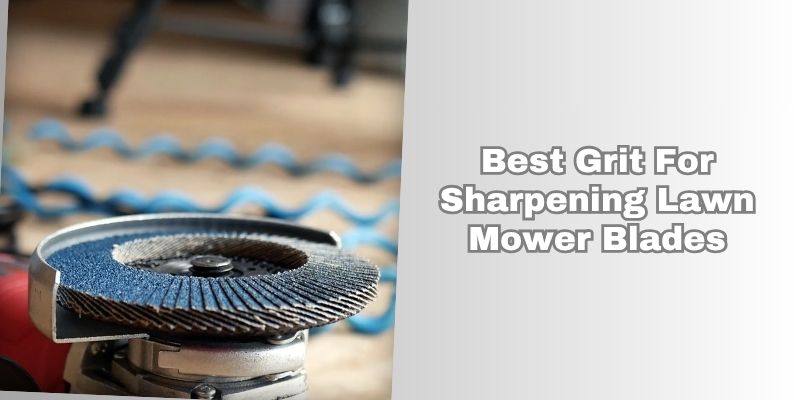
Finding the Best Grit For Sharpening Lawn Mower Blades can feel confusing when you see so many options. Coarse surfaces strip metal quickly, while fine abrasives polish the cutting edge. Choosing the wrong setup means you either take off too much steel or waste your afternoon rubbing a dull edge.
Our Top Picks
| # | Product | ||
|---|---|---|---|
| 1 |  | Jinlida JLD10-8 Grinder Best Overall | Check Price |
| 2 |  | Dunkive Sharpening Kit Best for Reel Mowers | Check Price |
| 3 |  | SHARPAL 121N Diamond File Best Manual File | Check Price |
| 4 |  | UF-SHARP Diamond Sharpener Best Drill Attachment | Check Price |
| 5 |  | Jinlida 1HP Grinder Most Powerful | Check Price |
| 6 |  | Smith's Edge Eater Best Compact | Check Price |
| 7 |  | Mercer Industries Rotary File Simplest to Use | Check Price |
| 8 |  | SporGain Blade Sharpener Most Versatile | Check Price |
1. Jinlida JLD10-8 Lawn Mower Blade Sharpener
Best for: Homeowners wanting a complete benchtop sharpening setup.
The Jinlida JLD10-8 Grinder runs on a 2/3HP 500W motor spinning at 1700 RPM to clean up dull edges quickly. The machine comes with a 7-inch 60 grit ceramic grinding wheel plus five replacement 60 grit discs. You get a dedicated 30° tool holder and two 40° knife holders, so you won’t have to guess your grinding angle while working.
Having preset brackets keeps angles consistent, but it restricts you to those specific angle setups. A metal balancer is also included in the box to help verify your blade won’t shake your deck after grinding. This electric bench setup isn’t for buyers looking to touch up cutting edges out in the yard without a power outlet.
Pros
- Includes five extra 60 grit discs
- Comes with a metal balancer
- Fixed tool holders set stable angles
Cons
- Requires dedicated bench workspace
- Needs access to standard electrical power
2. Dunkive Sharpening Kit
Best for: Owners of manual push reel mowers.
The Dunkive Sharpening Kit takes a chemical approach designed specifically for reel mower back lapping. It provides two jars of paste: an 80 grit compound to grind away uneven spots and a 120 grit compound for final smoothing. The water-soluble gel formula stays on the metal during the job, then washes off cleanly with standard tap water.
Because this compound is made for manual push mowers like Great States and American Lawn Mower brands, it uses a brush rather than a motorized wheel. The kit includes gloves and 200g of total paste across both jars. This compound kit isn’t for standard rotary lawn mower blades, as rotary steel needs a grinding wheel or file rather than back lapping paste.
Pros
- Water-soluble gel rinses away easily
- Includes application brush and work gloves
- Two separate grits for progressive smoothing
Cons
- Only fits reel-style push mowers
- Requires manual turning for back lapping
3. SHARPAL 121N Dual-Grit Diamond Sharpening Stone Garden Tool File
Best for: Gardeners wanting portable, oil-free manual sharpening.
The SHARPAL 121N Diamond File features monocrystalline industrial diamonds bonded across full-tang stainless steel. It offers dual surfaces: a coarse 325 grit (45 micron) side to establish your bevel, and an extra-fine 1200 grit (12 micron) side for honing. You don’t need messy sharpening oils, so you can dress steel completely dry.
The built-in handle has 20° angle guides on both sides to help keep your strokes level and even. The manufacturer covers the tool with a 3-year commitment backed by facilities in California, Germany, and Australia. This hand file isn’t for users who have multiple severely chipped blades to reshape, because manual filing takes physical arm effort.
Pros
- Coarse and extra-fine diamond surfaces
- Built-in 20-degree integrated angle guides
- Three-year manufacturer commitment included
Cons
- Requires manual arm power
- Slower on deep metal gouges
4. UF-SHARP Diamond Lawn Mower Blade Sharpener
Best for: Quick blade touch-ups using standard drills.
The UF-SHARP Diamond Sharpener relies on a 120 grit diamond grinding wheel mounted on an all-metal frame. Its 5mm steel shank fits into standard electric drill chucks, letting your drill supply the spinning power. The double-sided grinding wheel design lets you flip the disc over once one side wears down.
Because the tool depends on your drill, you don’t have to buy a standalone motor assembly to sharpen garden shears, rototillers, or mower blades. It uses a 120 grit surface, which removes steel steadily without tearing away huge chunks of metal. This attachment isn’t for users without a dependable power drill on hand.
Pros
- Standard 5mm shank fits power drills
- Reversible double-sided diamond grinding wheel
- Sturdy all-metal structural components
Cons
- Requires an electric power drill
- Lacks physical angle guide brackets
5. Jinlida 1HP Grinder
Best for: Heavy-duty sharpening of multiple blade designs.
The Jinlida 1HP Grinder delivers serious power with a 1HP motor running at 1750 RPM. It uses a large 9-inch ceramic grinding wheel prepped with 60 grit ceramic sandpaper to tackle flat, high-lift, low-lift, and gator blades. The listing doesn’t mention vibration or sparks.
The package comes well-equipped, including four ceramic discs, five blade hole adapters, a spark guard, and a balancing tool. It features a pre-installed 30° bracket alongside an alternate 40° bracket for different blade bevels. This machine isn’t for users with limited garage space who just need a simple seasonal touch-up.
Pros
- Powerful 1HP motor at 1750 RPM
- Handles flat, gator, and lift blades
- Includes balancer and five hole adapters
Cons
- Large 9-inch frame takes space
- Heavier machine to move around
6. Smith’s Edge Eater
Best for: Compact storage inside small toolboxes.
The Smith’s Edge Eater is a handheld coarse-grit sharpening puck built for general yard tools. Measuring 2.61 inches long and weighing just 8 ounces, it slips right into a shed drawer or vehicle glove box. The body incorporates a recessed groove grip with a top stone cap designed to shield your fingers during use.
The coarse grit material quickly cuts away rust and dull spots on axes, machetes, shovels, and rotary mower edges. Because it’s completely manual, you can take it into the field without cords or batteries. This stone isn’t for users looking for high-precision bevel guides, as edge angles depend entirely on your hand control.
Pros
- Very light at eight ounces
- Protective top cap protects your fingers
- Works dry on multiple yard tools
Cons
- No angle guides included
- Manual friction requires arm strength
7. Mercer Industries BCDRT08-8″ Rotary Mower File with Handle in Reusable
Best for: Homeowners who prefer traditional hand files.
The Mercer Industries Rotary File is an 8-inch high-carbon steel file built for standard tool maintenance. It features a built-in paddle handle that provides a firm grip without buying extra wooden handles. The flat file face is cut to sharpen rotary mower blades, garden hoes, wood scrapers, and chisels.
It ships inside a reusable plastic sleeve, which keeps the cutting teeth from rubbing against other tools in your drawer. Because it’s a solid piece of high-carbon steel, there are no moving parts or drill shanks to assemble. This file isn’t for buyers looking for multi-grit progression, as it only provides a single filing texture.
Pros
- Built-in paddle handle simplifies gripping
- Durable high-carbon steel file construction
- Includes reusable protective plastic sleeve
Cons
- Single coarseness with no honing surface
- Takes manual effort to cut steel
8. SporGain Lawn Mower Blade Sharpener 2/3 HP 550W
Best for: Fast abrasive disc swaps across dual grits.
The SporGain Blade Sharpener runs on a 2/3 HP 550W motor and features an adaptable abrasive disc layout. It includes 20 total sandpaper discs split between 60 grit for fast grinding and 180 grit for finer finishing. A snap-lock wheel cover eliminates loose screws, letting you switch out worn paper discs quickly.
The listing doesn’t mention the material of the frame. These brackets secure flat, gator, and high-lift edges steadily against the 7-inch spinning disc. This bench unit isn’t for buyers needing a lightweight, portable sharpening stone to pack away in a pocket.
Pros
- Includes twenty 60 and 180 discs
- Snap-lock cover simplifies paper disc changes
- Supports 30-degree and 45-degree angle settings
Cons
- Stationary motor requires garage table space
- Produces sparks requiring dedicated safety space
Also Worth Considering
- SHARPAL 181N Dual-Grit Diamond Sharpening: This dual-grit diamond file offers coarse and fine surfaces for sharpening garden tools without requiring messy honing oils.
- Generic Lawn Mower Sharpening Kit: This two-piece set provides 80 grit and 120 grit paste weighing 1.5 pounds for push reel mower back lapping.
- TARIST Diamond File Set: This 3-piece set includes 8-inch flat, half-round, and round files to dress mower blades, shears, and woodworking tools.
Where These Overlap
The Jinlida JLD10-8 Grinder and SporGain Blade Sharpener share nearly identical footprints and core designs. Both units run 2/3 HP motors (500W and 550W) turning 7-inch abrasive discs backed by fixed steel angle brackets. The main separator comes down to the paper: the SporGain includes both 60-grit and 180-grit discs with a snap-lock cover, whereas the Jinlida focuses on 60-grit ceramic discs with an included blade balancer. The UF-SHARP Diamond Sharpener and handheld files like the Mercer Industries Rotary File also cross paths for general maintenance, but the drill attachment uses machine speed while the steel file gives you total manual feedback.
Still Not Sure?
How often will I really use it?
If you only touch up a blade once every spring, a simple tool like the Mercer Industries Rotary File handles the job without hogging your shelf space. Homeowners with several mowers or tough property grounds will appreciate the speed of the Jinlida JLD10-8 Grinder.
What do I already own that this has to work with?
If you already keep a reliable cordless drill in your garage, the UF-SHARP Diamond Sharpener saves bench space by using your existing tool. If you push an unpowered reel mower through your grass, you must pick the Dunkive Sharpening Kit instead of any rotary wheel.
What am I most likely to regret choosing?
Buying a dedicated motorized station can lead to buyer’s remorse if you don’t have the table space to mount it permanently. A compact puck like the Smith’s Edge Eater prevents clutter, but you’ll regret it if you expect machine-fast edge repairs on deeply notched blades.
For the best stationary setup, the Jinlida JLD10-8 Grinder offers great overall performance, while the Jinlida 1HP Grinder easily handles heavy-use demands. Check your mower deck clearance today and verify your blade mounting hole size before ordering.
FAQ
What is the best grit for sharpening lawn mower blades?
A coarse abrasive works best for reshaping metal, removing rock nicks, and cutting a clean bevel. Finer abrasives help smooth the edge, but mower blades don’t require razor-thin polishes because ultra-thin edges dull quickly in dirt.
Can I sharpen a reel mower with a standard grinding wheel?
No, reel mowers use spinning spiral blades that shear against a stationary bedknife, requiring back lapping paste instead of grinding wheels. Kits like the Dunkive Sharpening Kit use 80 and 120 grit paste to lap the surfaces together without taking the reel apart.
Do I need to use oil or water on diamond sharpening files?
Most modern diamond sharpeners, such as the SHARPAL 121N Diamond File, are designed to be used dry without cutting oils. Using them dry saves time on cleanup, though you can rinse off loose metal dust with water once you finish.
Why do some sharpeners include a blade balancer?
Sharpening removes steel from the blade, which can easily leave one side heavier than the other. Spinning an uneven blade damages mower engine spindles, so tools like the Jinlida JLD10-8 Grinder include balancers to ensure both ends weigh the same.
Conclusion
Finding the Best Grit For Sharpening Lawn Mower Blades comes down to using coarse abrasives for fast metal shaping and finer options for smooth finishing. Match your choice to your mower style and bench space to keep your lawn cut cleanly all season.
Once you’ve finished sharpening, test your mower on a small patch of grass to see how it performs. You’ll notice a cleaner cut that keeps your lawn looking healthy and vibrant. If the results aren’t quite sharp enough yet, don’t worry—just take your time and touch up the edge again.