
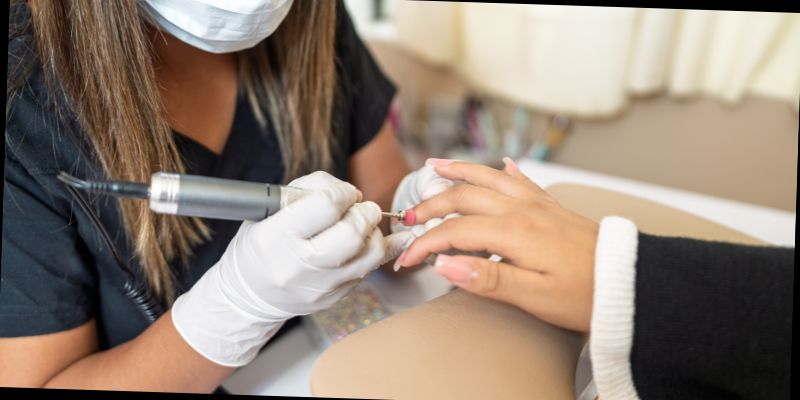
Choosing the right nail drill bit matters more than most beginners realize. The wrong shape or material can slow down removal, damage the nail plate, or cause heat buildup. The right bit does the opposite — it cuts cleanly, stays cool, and gets the job done faster. This guide covers the best nail drill bits for every service type, explains the difference between materials, and helps both beginners and professionals pick what actually works.
What Are Nail Drill Bits and How Do They Differ?
A nail drill bit has two parts: the shank (which fits into the handpiece) and the working head (which does the actual work on the nail). Most professional bits use a standard 3/32″ shank and fit any e-file machine.
The four main bit materials are:
- Diamond — abrasive surface ideal for cuticle work, natural nail prep, and light skin exfoliation; gentle and long-lasting
- Carbide (tungsten) — fluted metal teeth designed for fast product removal; works best on acrylics, hard gels, and builder gels
- Ceramic — smooth heat-free cutting for gel polish, top coat, and builder removal without burning the nail plate
- Sanding bands — single-use fabric sleeves on a mandrel; great for surface prep, shortening tips, and shine removal
The shape of the head (cone, bullet, barrel, ball, umbrella, corn) determines what task it handles best. There’s no universal bit — every step in a service has a purpose-built tool.
Carbide vs Ceramic Nail Drill Bits: Which Should You Choose?
This is one of the most common questions among nail techs. The answer depends entirely on the service.
Carbide bits cut aggressively and remove large amounts of product quickly. They work best at higher RPMs and are designed for one-direction rotation. Using them on natural nails or near the cuticle risks thinning the plate. They’re the go-to choice for acrylic removal, hard gel backfills, and polygel correction.
Ceramic bits are gentler and produce less friction heat, making them safer for gel polish removal and work closer to the skin. They can be used on natural nails and are more forgiving for beginners. The ceramic drill bits collection at Kvadro includes corn, ball, umbrella, and bullet shapes in multiple grit levels from medium (M) to extra fine (XF) — all priced at $7.99 per bit.
A quick rule: use carbide for bulk removal of dense products; use ceramic when working closer to skin or natural nail.
Best Nail Drill Bits for Beginners
Beginners need bits that are forgiving, easy to control, and unlikely to cause damage. Top picks:
- Ceramic cone or corn bit (medium grit) — for gel polish removal without heat buildup
- Diamond ball bit (fine) — for gentle cuticle prep and dry manicure work
- Sanding band on mandrel — for surface prep and tip shortening; single-use so there’s no sterilization concern
- Ceramic bullet bit (blue/medium) — like the Ceramic Nail Bit for Removal Bullet Blue #194 ($7.99), ideal for removing gel top coats without overheating
For storage, a 48-hole drill bit holder keeps bits organized and protected from dust and damage.
Best Bit for Removing Gel Polish and Acrylic Nails
Gel polish removal works best with a ceramic or carbide cone or barrel bit at low-to-medium RPM. Remove the shine first with a sanding band, then use a ceramic bit to take off the bulk without burning through to the base coat.
For acrylic nail removal, a carbide bit is the professional standard. The KMIZ Tungsten Carbide Nail Bit Blue Bullet 060-M ($19.99) and KMIZ Tungsten Carbide Nail Bit Red Cone 060-F ($19.50) are high-quality options for fast, controlled product removal. Both are made from tungsten carbide and designed for professional use at standard 3/32″ shank.
For hard gel, builder gel, and polygel removal, a carbide or ceramic corn bit at medium speed gives the best control. The carbide nail drill bits collection at Kvadro includes multiple shapes and grit options suited to each stage of removal.
Best Cuticle Drill Bits
Cuticle work is the most technique-sensitive part of any manicure. The bit needs to be precise enough to clean the eponychium and sidewalls without cutting into skin.
The best cuticle drill bits are:
- Diamond ball (fine or extra fine) — the most widely used bit for dry cuticle work; safe for regular rotation and gentle on skin
- Nail cleaner (carbide) — the Staleks Carbide Nail Drill Bit Safe “Nail Cleaner” Blue FT11/012/2.5 ($21.89) is designed specifically for cleaning under the free edge and along the sidewalls without risk of skin contact
- Ceramic umbrella or ball bit (XF) — removes dead skin from the cuticle area with minimal friction heat
Browse the full range of diamond nail drill bits at Kvadro for cuticle-safe shapes in various head sizes.
Best Sanding Bands for Nails
Sanding bands are single-use fabric sleeves that slide over a metal mandrel. They’re the most beginner-friendly bit option and work well for several service steps:
- Grit 80–100: removing gel overlays, shortening acrylic tips
- Grit 150–180: shaping and smoothing surfaces, backfills
- Grit 240: final surface prep before base application on natural nails
The stainless steel sanding band mandrel ($1.99) from Kvadro fits standard 3/32″ e-file machines and is the holder used with all sanding band grits. Because sanding bands can’t be sterilized, they should be discarded after each client — a key hygiene consideration in any salon setting.
Summary
The best drill bit depends on the task, not a single universal choice. Ceramic bits handle gel removal and cuticle-adjacent work cleanly and safely. Carbide bits are built for speed on hard products like acrylic and builder gel. Diamond bits are ideal for dry manicure cuticle work. Sanding bands are the most accessible entry point for beginners and remain useful at every level for surface prep. Browse the complete nail drill bits collection at Kvadro to build a professional bit set for every stage of your services.