
Ask any experienced boxer what separates good fighters from great ones, and footwork will almost always come up. It’s the foundation of every punch, every dodge, every angle change in the ring. Yet many beginners overlook a crucial piece of the footwork puzzle: what’s actually on their feet. Boxing shoes aren’t just another piece of merchandise—they’re functional equipment that can meaningfully impact your performance and safety.
Why Footwork Comes First in Boxing
Before you ever learn to throw a proper punch, most coaches will drill footwork fundamentals. That’s because boxing is fundamentally a sport of positioning. Your feet determine your balance, your power generation, your ability to evade strikes, and your capacity to close or create distance with an opponent.
Every effective punch starts from the ground up. Power travels from your legs, through your hips, into your torso, and finally out through your fists. If your footing is unstable or your shoes are working against you, that entire kinetic chain breaks down.
What Makes Boxing Shoes Different
Sole Design and Traction
Boxing shoes feature specialized soles designed for quick pivoting and multidirectional movement. Unlike running shoes, which prioritize forward momentum and heel cushioning, boxing shoes have flatter, thinner soles that keep you closer to the canvas or gym floor. This proximity improves your balance and stability during rapid direction changes.
The tread pattern also differs significantly. Boxing shoes typically feature smooth or minimally patterned soles that allow controlled pivoting, essential for rotating your hips into punches or quickly repositioning after an exchange.
Ankle Support
Many boxing shoes extend higher than typical athletic footwear, offering ankle support during lateral movements and quick directional shifts. This becomes particularly important during intense sparring or bag work sessions where sudden pivots and weight shifts happen constantly.
Lightweight Construction
Every ounce matters when you’re moving continuously for three-minute rounds. Boxing shoes are engineered to be minimal and lightweight, reducing fatigue during extended training sessions or matches. Heavy footwear can slow your reaction time and increase energy expenditure unnecessarily.
Flexibility
Boxing shoes bend and flex with natural foot movement, particularly through the ball of the foot where boxers spend much of their time on their toes during active exchanges. This flexibility supports the quick, springy movements essential to effective boxing footwork.
The Problem with Regular Athletic Shoes
Running shoes and cross-trainers, while excellent for their intended purposes, actually work against boxing footwork fundamentals. Their elevated heels shift your center of gravity backward, making quick pivots more difficult. The thick, cushioned soles reduce ground feel, making it harder to feel your positioning and balance.
Additionally, the tread patterns on running shoes are designed to grip and prevent slipping during forward motion—the opposite of what boxers need for smooth pivoting. This can actually cause knee and ankle strain when you try to rotate while your shoe’s tread resists the movement.
Building Better Footwork Fundamentals
The Basic Stance
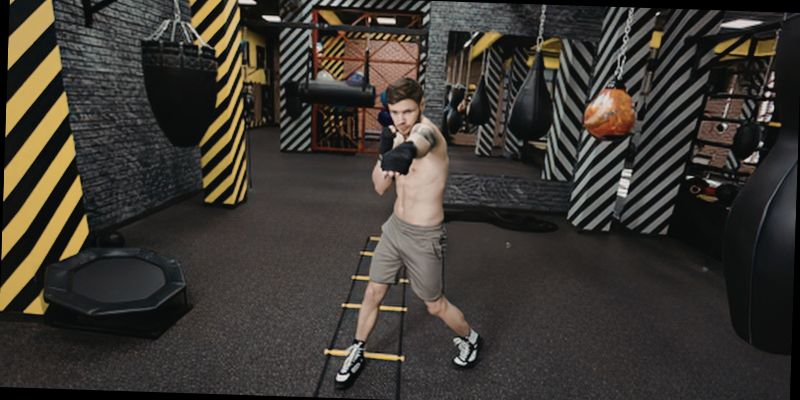
Proper footwork starts with your fundamental boxing stance: feet shoulder-width apart, dominant foot back, weight balanced on the balls of your feet. Boxing shoes facilitate maintaining this stance comfortably for extended periods.
Pivoting Practice
Quality boxing shoes allow smooth pivoting on the ball of your foot, essential for generating power in hooks and creating angles against opponents. Practice pivoting drills regularly, and you’ll notice how proper footwear enhances this fundamental movement.
Distance Management
Footwork isn’t just about power generation—it’s equally about defense and distance control. The right shoes help you quickly close distance for combinations or retreat to avoid counters, movements that require both speed and stability.
Weight Transfer
Effective boxing requires constant weight transfer between your feet, whether you’re loading power into a cross or maintaining balance during defensive movements. Boxing shoes support this fluid weight distribution better than flat-soled casual shoes or cushioned athletic footwear.
Choosing Your First Pair
When selecting boxing shoes, prioritize:
- Fit: Shoes should feel snug without restricting toe movement
- Sole thickness: Thinner soles provide better ground feel and stability
- Ankle height: Choose based on your preference for support versus mobility
- Breathability: Training sessions generate heat, so proper ventilation matters
- Break-in period: Some leather boxing shoes require breaking in for optimal comfort
Read More – Is a 1994 Darren Lewis Baseball Card Worth Anything?
Do Beginners Really Need Them?
If you’re just starting boxing fitness classes without sparring intentions, standard cross-trainers with flat, minimal soles can work temporarily. However, as you advance into technical training, sparring, or competition, proper boxing shoes become increasingly valuable for both performance and injury prevention.
Fancy Footwear For Fancy Footwork
Footwork forms the literal foundation of boxing skill, and your footwear directly impacts your ability to execute proper technique. While boxing shoes represent an additional investment beyond gloves and wraps, they’re a worthwhile addition for anyone serious about developing genuine boxing skills, protecting their joints, and maximizing their training effectiveness.
Your fists might get the glory, but your feet do the work that makes everything else possible.