

Virtual reality will reshape entertainment with immersive, social, and personalized experiences by 2030.
I have studied and worked with virtual reality systems and entertainment projects for years. This article explains The Future Of Virtual Reality In Entertainment with clear analysis, practical examples, and realistic timelines. Read on to learn how technology, content, business models, and user habits will change the way we play, watch, and share stories.
Market overview and why it matters
The Future Of Virtual Reality In Entertainment is driven by demand for deeper immersion. Markets show steady growth as hardware gets cheaper and software improves. Investors and creators see value in experiences that blend games, film, concerts, and live events. This section shows market forces and user trends that will shape adoption and design.
- Growing consumer interest: More people want immersive media and shared virtual spaces.
- Lower cost hardware: Headsets are getting lighter and less expensive to make VR mainstream.
- Cross-industry adoption: Film, music, and sports are testing VR to reach new audiences.
Core technologies enabling progress
The Future Of Virtual Reality In Entertainment rests on several key technologies. Improvements in display, tracking, and rendering raise realism. Cloud streaming and edge compute reduce hardware limits and let more users access high-end VR. Sensors and haptics add touch and motion cues that make scenes believable.
- High-resolution displays: Sharper images reduce eye strain and boost realism.
- Inside-out tracking: Easier setup for home users and better gesture capture.
- Real-time rendering: GPU advances support dynamic, cinematic VR environments.
- Cloud streaming: Enables complex experiences on modest headsets by offloading compute.
Content and storytelling evolution
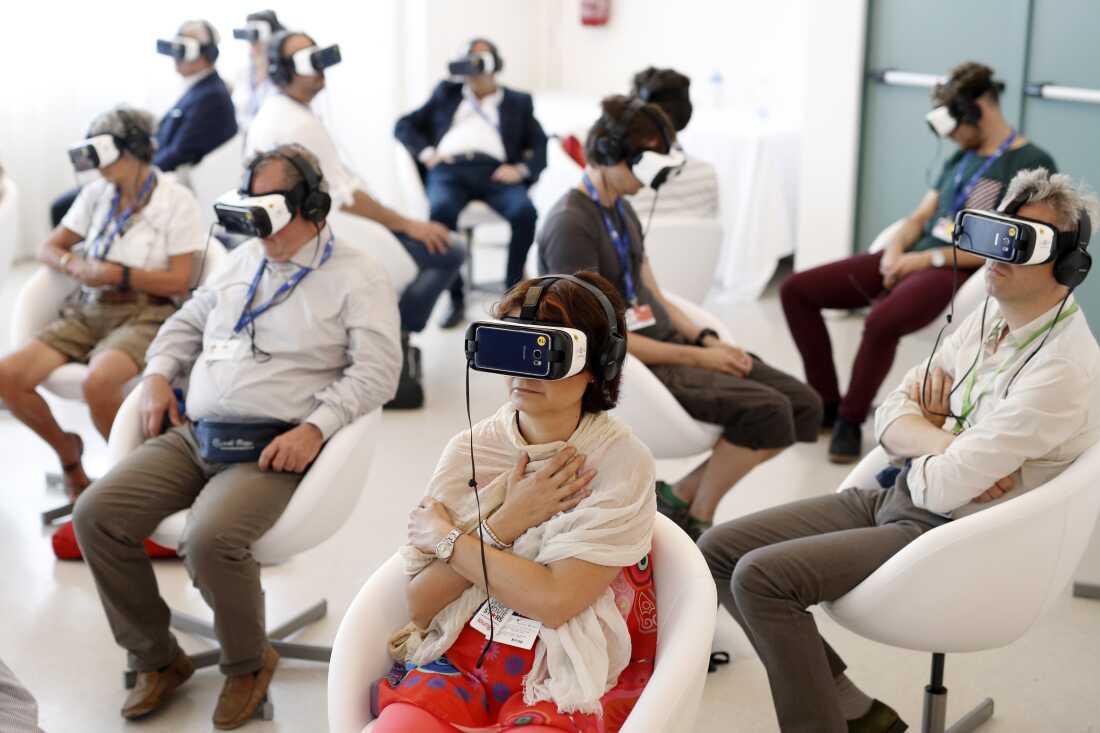
Storytelling must adapt for The Future Of Virtual Reality In Entertainment. Authors need to think in three dimensions and in social space. Linear narratives will coexist with interactive plots and player-driven outcomes. Successful creators blend cinematic craft with gameplay design and live interaction.
- Interactive narratives: Branching paths let users affect outcomes.
- Spatial audio and pacing: Sound and timing guide attention in 3D space.
- Mixed reality integration: Combining real actors with virtual sets expands creative options.
- Episodic VR: Serialized content can keep users returning over months.
Business models and monetization
Monetization strategies will change for The Future Of Virtual Reality In Entertainment. Subscriptions, live ticketing, microtransactions, and in-experience commerce all play roles. Brands will sponsor virtual events. Developers will need flexible pricing and strong community support to sustain models.
- Subscription platforms: Access to large VR libraries for a monthly fee.
- Live event tickets: Virtual concerts and sports sell passes and VIP experiences.
- In-experience commerce: Virtual goods and real-world cross-sell can add revenue.
- Creator economies: Independent artists monetize through tips, sales, and paid events.
User experience, accessibility, and inclusion
Design matters for The Future Of Virtual Reality In Entertainment to reach broad audiences. Comfort, simplicity, and accessibility features reduce barriers. Developers must prioritize motion comfort, adjustable controls, and captioning. Inclusive design expands markets and improves satisfaction.
- Comfort and ergonomics: Lightweight headsets and balanced weight reduce fatigue.
- Accessibility tools: Adjustable locomotion, captions, and control remapping are essential.
- Social features: Avatars, shared spaces, and moderation tools support community safety.
- Localized content: Language support and cultural tailoring increase global appeal.

Legal, ethical, and safety considerations
The Future Of Virtual Reality In Entertainment raises new legal and ethical questions. Privacy, user data, and content moderation require clear rules. Liability for physical or psychological harm must be addressed. Transparent policies and safety-by-design will earn user trust.
- Privacy protections: Limit biometric data collection and explain how data is used.
- Content moderation: Tools to manage harassment and misuse in social VR.
- Age gating: Controls for mature content to protect minors.
- Ethical design: Avoiding manipulation and dark patterns in immersive experiences.

Implementation: production pipelines and platforms
Creating large VR experiences needs new workflows for The Future Of Virtual Reality In Entertainment. Teams combine game engines, real-time capture, and cloud services. Agile pipelines let creators iterate quickly and deliver regular updates.
- Tool integration: Real-time engines, motion capture, and audio design must sync.
- Cloud collaboration: Remote teams can build and test without heavy local compute.
- Cross-platform development: Target multiple headsets and 2D fallback modes for reach.
- Testing and QA: Playtesting in real contexts identifies comfort and usability issues.

Case studies and personal experience
I have directed small VR demos and worked with studios on immersive content. Early projects taught me to prioritize comfort and narrative clarity. One demo failed because we overloaded new users with options. We fixed it by simplifying controls and guiding attention with audio cues. Those lessons apply broadly.
- Start simple: Early success comes from a clear, short experience.
- Guide the user: Spatial audio and clear prompts reduce confusion.
- Iterate with players: Real user tests reveal gaps that design teams miss.
- Monetize thoughtfully: Charge for value, not for confounding mechanics.
Future predictions and timelines
The Future Of Virtual Reality In Entertainment will unfold in waves. Short-term gains focus on improved hardware and hybrid events. Mid-term change brings mainstream social VR and better cross-play. Long-term shifts include photorealistic immersion and broad cultural integration.
- Next 1–3 years: More affordable headsets and stronger cloud streaming options.
- 3–6 years: Social VR platforms with live content and stable creator economies.
- 6–10 years: Widespread mixed reality, advanced haptics, and near-photoreal visuals.
Frequently Asked Questions of The Future Of Virtual Reality In Entertainment
What makes virtual reality different from traditional media?
Virtual reality places the user inside a three-dimensional environment. It engages sight, sound, and motion and allows direct interaction, unlike passive screens.
Will VR replace movies and TV?
VR will not fully replace movies and TV but will offer complementary experiences. Linear screen media will remain popular for convenience and social viewing.
How soon will VR become mainstream for entertainment?
Mainstream adoption is likely within 3–6 years as costs fall and content improves. Broader uptake depends on quality, comfort, and social features.
Is VR safe for children?
With proper age gating and content controls, VR can be safe for children. Parents should limit session length and choose age-appropriate content.
What careers will grow with VR entertainment?
Roles in 3D storytelling, real-time engineering, UX design, spatial audio, and community management will expand. Cross-disciplinary skills are especially valuable.
How do creators monetize VR experiences?
Creators use subscriptions, ticketed events, in-app purchases, sponsorships, and creator support. Diverse revenue streams help projects scale.
Conclusion
The Future Of Virtual Reality In Entertainment promises deeper immersion, richer social spaces, and new creative forms. Developers, artists, and businesses who focus on comfort, accessibility, and ethical design will lead the market. Start small, test with real users, and plan flexible monetization to succeed. Explore VR content, join a creator community, or try a headset to see these changes firsthand—then share your insights or questions below.